staihuman™human judgement as your team adopts AI
Artificial intelligence. Human judgement.
A blended programme for teams adopting AI. Self-paced online modules and live, facilitated sessions develop the human judgement and decision-making that AI can’t replace.
Developed from tools used with police, fire and rescue services, councils, regulators and large private organisations.
- Who it’s for
- Leadership and working teams facing AI-driven change
- Format
- Self-paced online modules plus live facilitated cohort sessions
- Duration
- Minimum 8 weeks, at least 3 hours a week
- Group size
- Teams of up to 20; several teams can run in parallel
- Cost
- By proposal, per team
The problem
AI can process the information. It can’t do the human part for you.
What we often see
The focus is on the technology
- Training covers the tools, not the people using them
- Anxiety about roles goes unspoken
- Judgement is handed over, or dug in against
- Old patterns of behaviour carry on, faster
What better looks like
The focus is on human judgement
- Leaders understand what drives their own decisions
- People can name what they fear losing
- Teams decide what to keep human, and why
- New tools land in a culture that can use them well
Technology changes faster than people do.
That is why so many technology programmes deliver the tools but not the benefits. staihuman works on the situations leaders are facing now: what should stay human, who am I if this changes, can I trust what it tells me, and how do we lead people through it. Every one is a people question first.
Who it’s for
Teams where AI is already changing the work.
From senior leadership teams to frontline teams, in the public and private sector. Many organisations start with their leadership team, then run it with other teams.
The situations
- AI tools being introduced into day-to-day decisions
- Roles and identities shifting as work changes
- Uncertainty about when to rely on a tool and when to question it
- Transformation programmes that need people, not just systems, to change
The people
- Leaders responsible for a team’s AI adoption, people or transformation
- Leadership teams and working teams facing AI-driven change
- HR, OD and L&D leads supporting adoption
staihuman is not technical AI training. No technical background is needed, and it complements whatever tools training you already run.
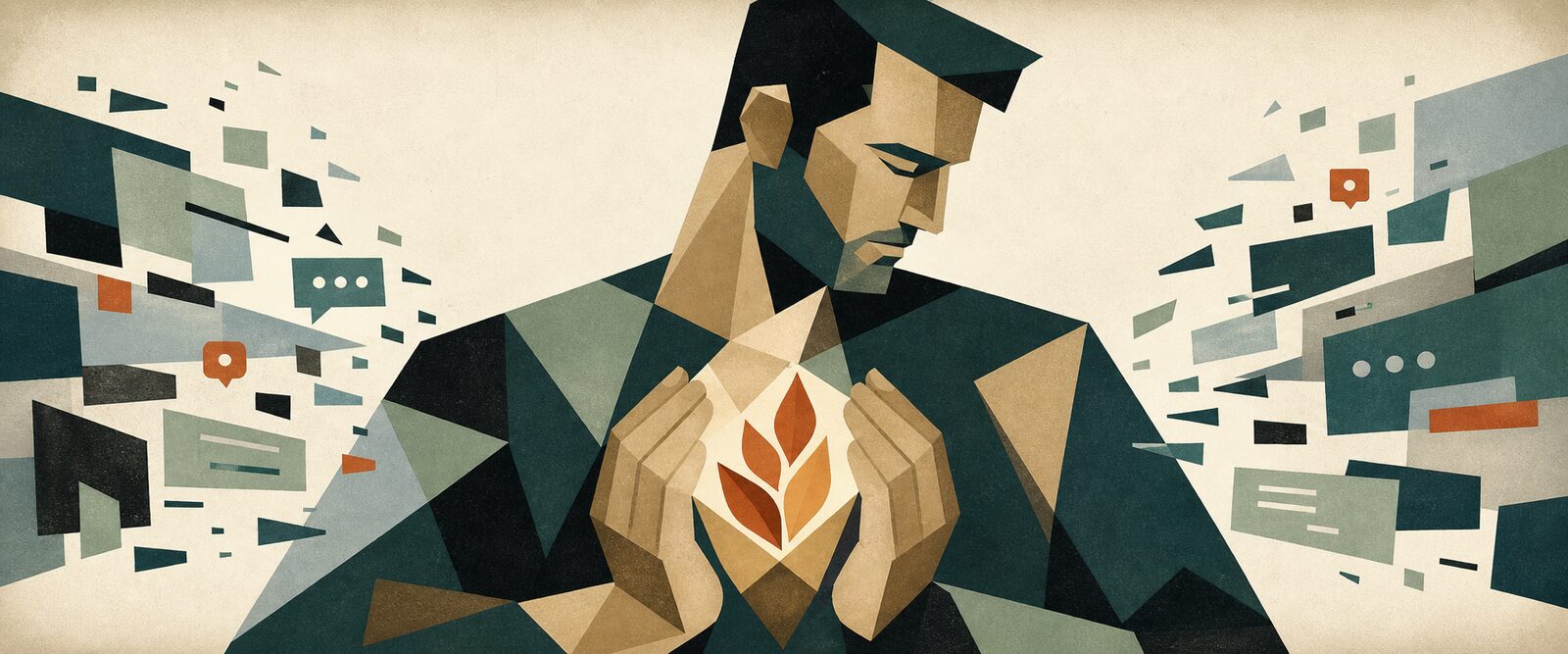
Keep the human part human.
Outcomes
People who use AI well, and lead well alongside it.
What changes for your people, and for the decisions they make with AI in the room.
Good for your people
- Self-awareness. They understand what drives their own decisions, and what pulls them off course.
- Steadier through change. Fears about roles and identity are named and worked with, not ignored.
- Better judgement. They know when to rely on a tool and when to question it.
Good for your organisation
- A shared language for talking about human behaviour at work
- Teams that have decided explicitly what stays human, and why
- Accountability kept where it belongs: choices people can explain
- Measures agreed at the start; module questionnaires compared before and after
The programme
Eight parts. One wheel.
The same four-part structure that underpins machine learning also underpins human psychological development. The lower half of the wheel, the formative forces, shapes how each of us decides. The upper half, the capacities, is what the programme rebuilds.
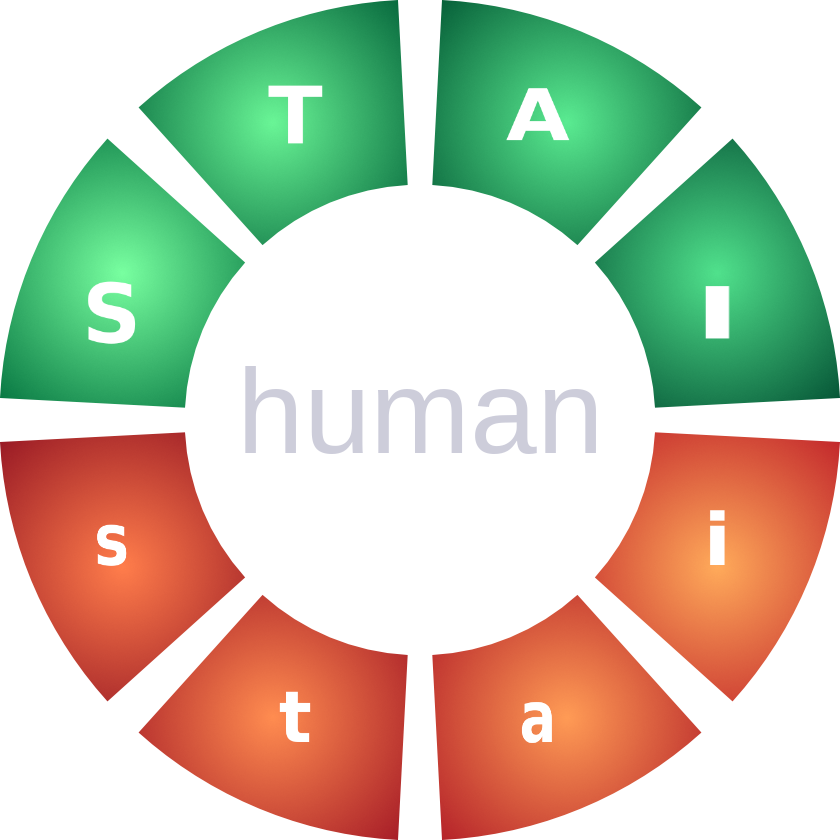
stai · the formative forces
Self-paced online modules
- Stimulation. The recognition and contact we seek
- Training. How we learned to get it
- Attachment. Who we attached to, and how
- Interpretation. How we read ourselves and others
STAI · the capacities
Live, facilitated cohort sessions
- Structure. Time with intention
- Transition. Reframe what is changing
- Agency. Think for yourself
- Imagination. See another way
01Self-paced modulesThe four formative forces, at each person’s own pace+
Online modules introduce the lower half of the wheel: how stimulation, training, attachment and interpretation shaped the way each of us decides. Each module ends with a short questionnaire, which becomes the baseline for measuring change.
02Live cohort sessionsRebuilding the four capacities with other people+
Facilitated sessions work on structure, transition, agency and imagination, using the AI changes your team is actually facing. People name what they fear losing, and decide together what should stay human, and why.
03Practice at workApplying the tools to real decisions+
Between sessions, participants apply the tools to live decisions involving AI, noticing when they are handing judgement over, or digging in against it.
04ReviewWhat changed, compared with where you started+
Module questionnaire results are compared before and after, alongside the measures we agreed with you at the start.
What’s included
From the personal audit to the review.
- Before
- Personal audits and a baseline questionnaire for each participant
- Online
- Self-paced modules on the four formative forces
- Live
- Facilitated cohort sessions, in person or virtual, on the four capacities
- At work
- Practice on live decisions, with embed sprints between sessions
- After
- A review comparing questionnaire results with where you started
- Who delivers
- Accredited clinical professionals, including a BACP-accredited psychotherapist and an Association for Coaching-accredited coach

Teams decide what to keep human, and why.
Evidence
Built by people who study how humans decide.
13+years of senseia leadership programmes across public services, from councils to emergency services, and with corporate clientsSee our impact by sector →
Built on transactional analysis, attachment theory and current neuroscience, translated for working life.
staihuman is a new programme, developed from tools senseia has used with police and fire and rescue services, councils, regulators and large private organisations over more than thirteen years. Impact is measured with each organisation: we agree measures at the start and compare module questionnaire results before and after.
Common questions
Before you commission.
How is this different from AI skills or prompt training?+
AI skills training teaches people to use the tools. staihuman focuses on the people using them: what drives their decisions, what they fear losing, and what should stay human. No technical background is needed.
How do we keep human judgement and accountability when staff use AI?+
By helping teams decide explicitly what stays human, and helping individuals notice when old patterns, rather than evidence, are steering a decision. The work on agency focuses on making choices you can explain, which is the basis of accountability when AI is involved.
How do we deal with staff resistance, anxiety or over-reliance on AI?+
These are the questions the programme is built around. People name what they fear losing, reframe the beliefs that keep them stuck, and learn to notice when they are handing judgement over or resisting it, so new tools land in a culture that can use them well.
Can it be tailored to policing, fire, NHS or council settings, and bought through a framework?+
Yes. staihuman was developed from tools used with police, fire and rescue services, councils and regulators, and scenarios are tailored to your setting and the AI changes you are making. Cost is by proposal, per team. senseia has qualified for the RM6219 Training and Learning for the Public Sector dynamic purchasing system.
Start with a conversation
Keep the human part human.
Tell us where AI is changing work in your team. We’ll talk through where staihuman would start, and how many teams it should include.
Talk to us about this programme


